

I just read an interview with retired fund manager Bob Rodriguez who managed award winning FPA mutual funds in stocks and bonds. Like us, Rodriguez believes in owning cash when there is a storm on the horizon and he held significant amounts of cash (30-40%) in 2000 and 2008 in his actively managed stock mutual fund. He is now retired but he is seeing a perfect storm developing thanks to the huge shift into passive management where there are NO cash holdings. When the next downturn hits, many of those invested strictly in passive instruments will likely be hit extremely hard and their timing will be poor to hit the sell button. Here are his insights on the coming storm:


The rise of ETFs and their biggest flaw
When you go grocery shopping and walk down the cereal aisle, are you overwhelmed by the number of varieties? There are probably too many choices. Today the same situation exists in the stock market. Investors have so many choices that you literally have tens of thousands of alternatives.
In the last 10 years, there has been a dramatic shift away from mutual funds and into exchange traded funds or ETFs. The amount of mutual funds peaked around the year 2000 and has remained pretty constant around 8000 funds. In the meantime, the number of publicly traded stocks has declined steadily and the amount of ETFs has been on the rise. Today the number of funds and ETFs is almost 3x the number of stocks available on US exchanges. If you add them all up, you have roughly 13,000 potential investment options between stocks, ETFs and mutual funds.
The Downside of Passive Investing
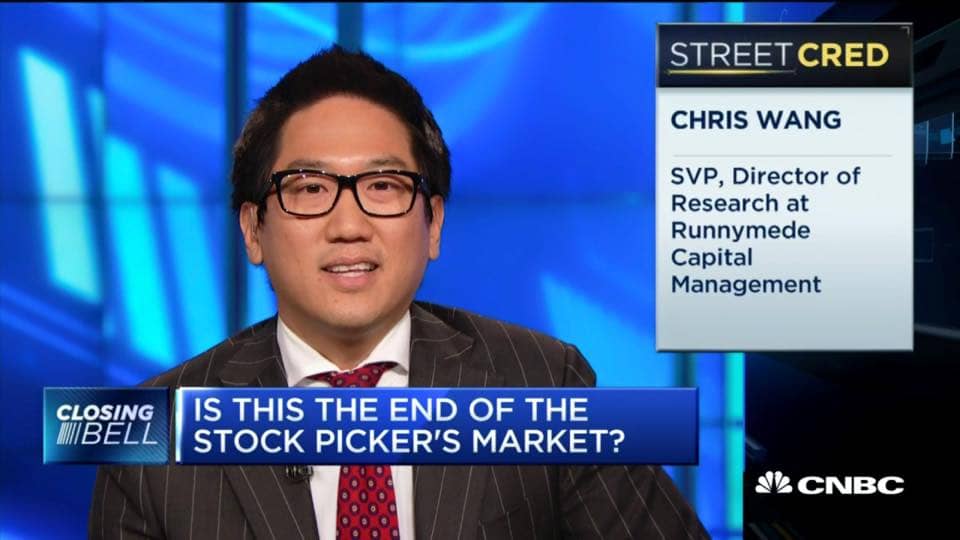
Earlier this month, I was invited to make an appearance on CNBC's “The Closing Bell” to discuss the topic “Is this the end of a stock picker's market?” I enjoyed the lively debate with Ross Gerber and Evan Newmark. In case you missed it, click the video link below. Since one can only say so much in a 4-minute segment, I'd like to share some additional thoughts with our loyal Runnymede readers.
Many articles have been written about the shift from active to passive investing. The thesis is simple. The majority of active mutual fund managers underperform their index and also charge a higher fee. This is a double whammy for an investor's bottom line. Therefore, the solution seems simple: move your money into low-cost index funds and that should lead to higher returns over the long term. Unfortunately, it's not that easy. Let's take a look at the potential pitfalls of passive investing.

Will Kamikaze Kuroda crash the global financial markets?
Near the end of World War II, the Japanese conducted Kamikaze or suicide attacks, designed to destroy warships more effectively than was possible with conventional attacks, against Allied naval vessels in the closing stages of the Pacific campaign. About 3,800 kamikaze pilots died, and fortunately, only a small percentage of kamikaze attacks managed to hit American ships.
Is the Kamikaze behavior alive and well in the 21st century in Japan?
The Bank of Japan Owns Half of Japan’s ETFs Market and It May Just Buy the Whole Damn Thing
“”A system of capitalism presumes sound money, not fiat money manipulated by a central bank. Capitalism cherishes voluntary contracts and interest rates that are determined by savings, not credit creation by a central bank.”” — Ron Paul