“It's déjà vu all over again.” – Yogi Berra
The stock market has long been classified by economists as a leading indicator of the economy. It tracks and reflects the nation’s economy and industry fundamentals. The market often seems able to anticipate positive or negative change before it happens. Since the beginning of the bear market in August of 2015, the prices of many bank stocks, especially European and Japanese banks, have declined steadily and precipitously. Deutsche Bank has lead the way by dropping below the level it reached in 2009. Shares of HSBC, Citibank, Bank of America, Credit Suisse, Goldman Sachs as well many other big banks have also taken a beating of 25-45%.

They Say The Sky Is Clear, We Say Take Cover
Bubbles are the only things that matter. The rest of it is boring. You show up for work, markets are at normal levels, and there's not much you can do. It's all trivial. But in a great bubble you can get your clients' arses out of the way, and the money you can save can be quite legendary.”” – Jeremy Grantham
The financial services industry generally frowns upon market prognosticators. “”Stay the course,”” they say. This is especially true in recent years since passive investments have outperformed active ones. Admittedly, peering into one's financial crystal ball and voicing an opinion can be a risky endeavor. Besides the obvious risk of being wrong, another risk is being labeled a perma-bull or perma-bear. In article after article that I read, the media loves to turn to its favorite go-to bulls and go-to bears for an appropriate quote. Unfortunately, few individuals are permitted to change their minds and even fewer do it well.
At Runnymede, we do a lot of research, and our view is dynamic, not fixed. Ultimately, our market outlook is reflected in the positioning of our clients' portfolios.
The Fed: Asleep at the Switch
Fed’s Williams foresees up to five rate hikes this year. Is he clueless?
Many of the economic departments of the regional Federal Reserve banks conduct outstanding research on the economy. At Runnymede, I rely on them heavily for my prognostication on the economy as well as the stock market. The pity is the bosses at the Fed must not read their own research. Is it possible that the Chicago Fed's National Activity Index (CFNAI) is not part of the “data” that the Central bank is so “dependent” upon? CFNAI has missed expectations 9 of last 11 months and has been below 0 (contraction) for 8 months last year. In November the index missed expectations once again, tumbling to its lowest reading since May.
Will Kamikaze Kuroda crash the global financial markets?
Near the end of World War II, the Japanese conducted Kamikaze or suicide attacks, designed to destroy warships more effectively than was possible with conventional attacks, against Allied naval vessels in the closing stages of the Pacific campaign. About 3,800 kamikaze pilots died, and fortunately, only a small percentage of kamikaze attacks managed to hit American ships.
Is the Kamikaze behavior alive and well in the 21st century in Japan?
Wall Street strategists forecast a weak bull market again for 2016
As we near a close to 2015, it is time to look forward to 2016. We have done this in 2014 and 2015, so it is becoming a tradition to see which strategists did well and which missed the mark. What do the experts think will happen in 2016 and should we even care.
Perhaps you are familiar with Philip Telock's landmark UC Berkeley study that looked at 82,000 predictions over 25 years by 300 leading economists. It turned out that their so called expert views were no better than random guesses, and worse, the more famous, the less accurate the prediction.
Last year the strategists predicted a weak bull market for 2015, but it turned out they were still too optimistic. Their average forecast was for a 6% gain in the S&P 500 to 2218. However as of today the S&P 500 stands at 2074 which is down slightly from its 2089 close at year end 2014. The two that were closest to the mark were Goldman's David Kostin and Barclays' Jonathan Glionna who both forecast a year end close of 2100.
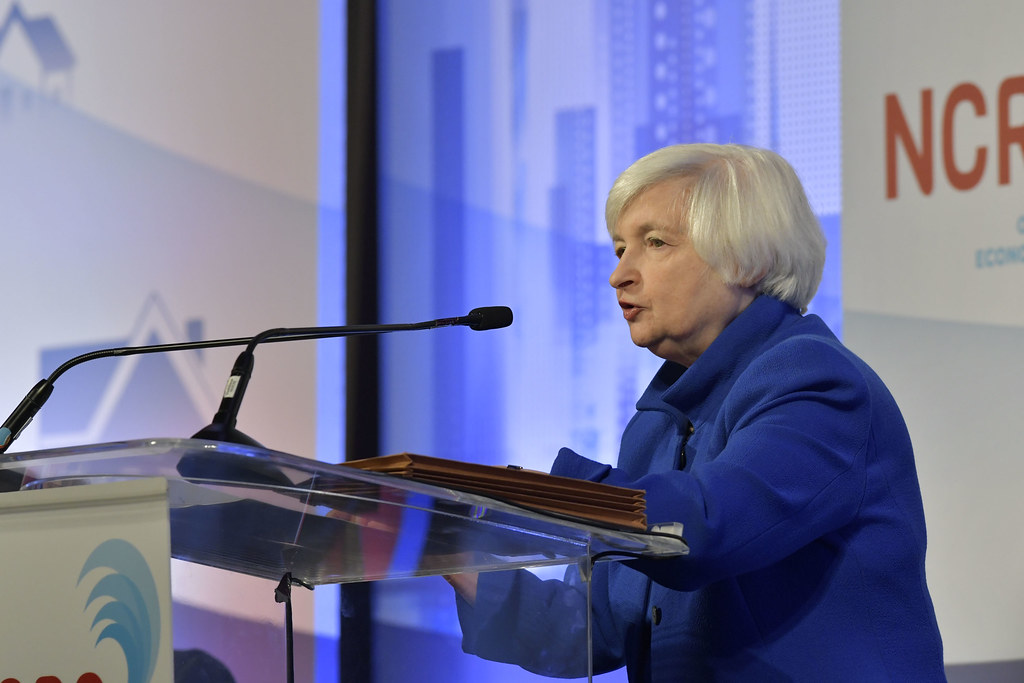
We’re Not Too Sure About Janet Yellen’s Economic Forecast
The #Fed has NEVER correctly forecast a recession.
— Jim Rickards December 16, 2015
The Fed announced that it would increase its benchmark rate by one quarter of a percentage point. The major beneficiaries will be the banks and brokers, not people on Main Street. Runnymede believes the US and world economies will weaken in the quarters ahead. Our view is supported by Jim Rogers, a top investor, and Sam Zell, a real estate tycoon.
The Fed has a very different opinion. Who will be right?