
In seven years of offering investment management services to captive insurance companies, we are acutely aware how conservative many captive owners are when it comes to investment objectives and goals. A cookie cutter “one size fits all” approach does not work when it comes to constructing investment portfolios. The makeup of a captive insurance company’s portfolio should take into account the type of risk insured, projected loss patterns, and cash needs. In some cases, captive owners are so risk averse that they choose not to invest and are content to sleep well at night by owning money market funds and cash. Among captive managers, accountants, and actuaries, quite a few people have asked me, “What is the cost of NOT investing?”
The Rise of The Recurring Revenue Portfolio
On the heels of my recent post “What Are Kerchunker Companies? 5 Reasons Why You Should Like Them,” please watch this recent CNBC interview of Mike Smerklo, Chairman and CEO of ServiceSource. Many high tech companies are realizing what IBM did 20 years ago. The information technology industry can rapidly become commoditized so IBM determined that the company needed to shift its portfolio to a more balanced mix of high-value offerings. That meant a transition away from products (hardware) and growing its services and software businesses. Today, the cloud is enabling companies to offer Software as a Service (SaaS) which often boasts better customer retention and more recurring revenue.
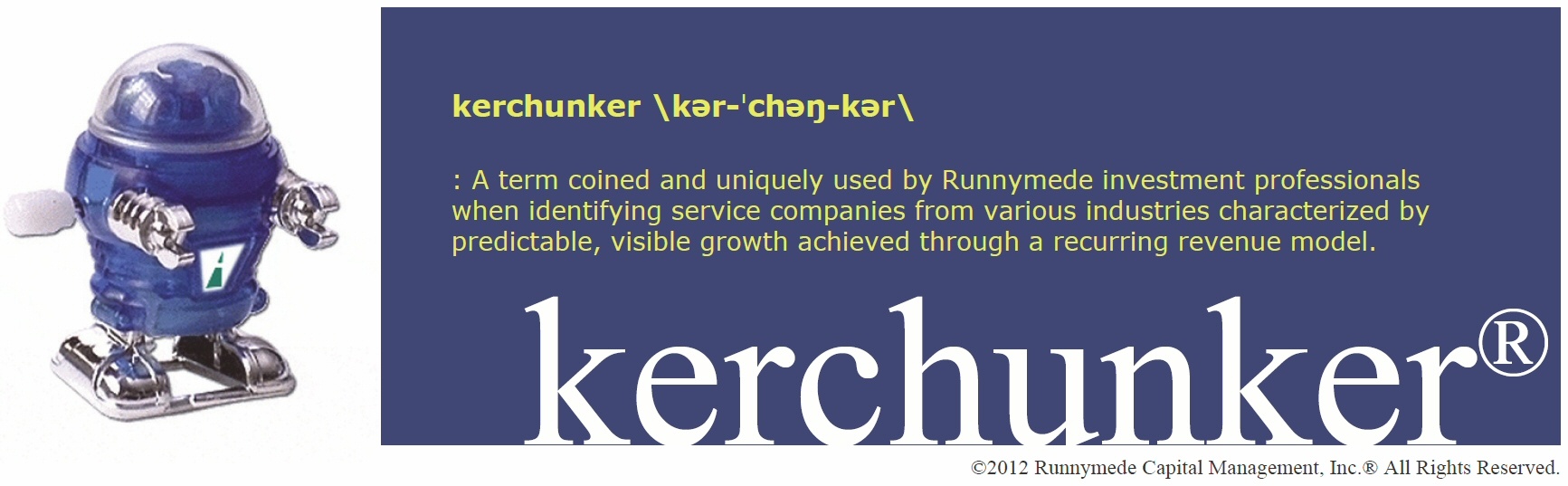
What Are Kerchunker Companies? 5 Reasons Why You Should Like Them
“”What the heck is a kerchunker® company?”” you ask. Kerchunker is a term trademarked by Runnymede professionals to describe service sector companies that are steady and often have recurring revenue models. Hopefully, each quarter and each year, they grow… kerchunk, kerchunk, kerchunk!